Need help? Ask Smiles360
Checking practice opening status...
Emergency dentist Hornchurch at Smiles360 Dental Practice

Emergency Dentist Hornchurch

Urgent help for toothache, swelling, dental abscesses, broken or knocked-out teeth and dental trauma in Hornchurch.

Emergency dentist in Hornchurch

Dental pain rarely arrives at a convenient time. If a tooth is throbbing, your face is swelling, a filling has broken or an accident has damaged a tooth, the first job is to work out what is happening and what needs to be done next.
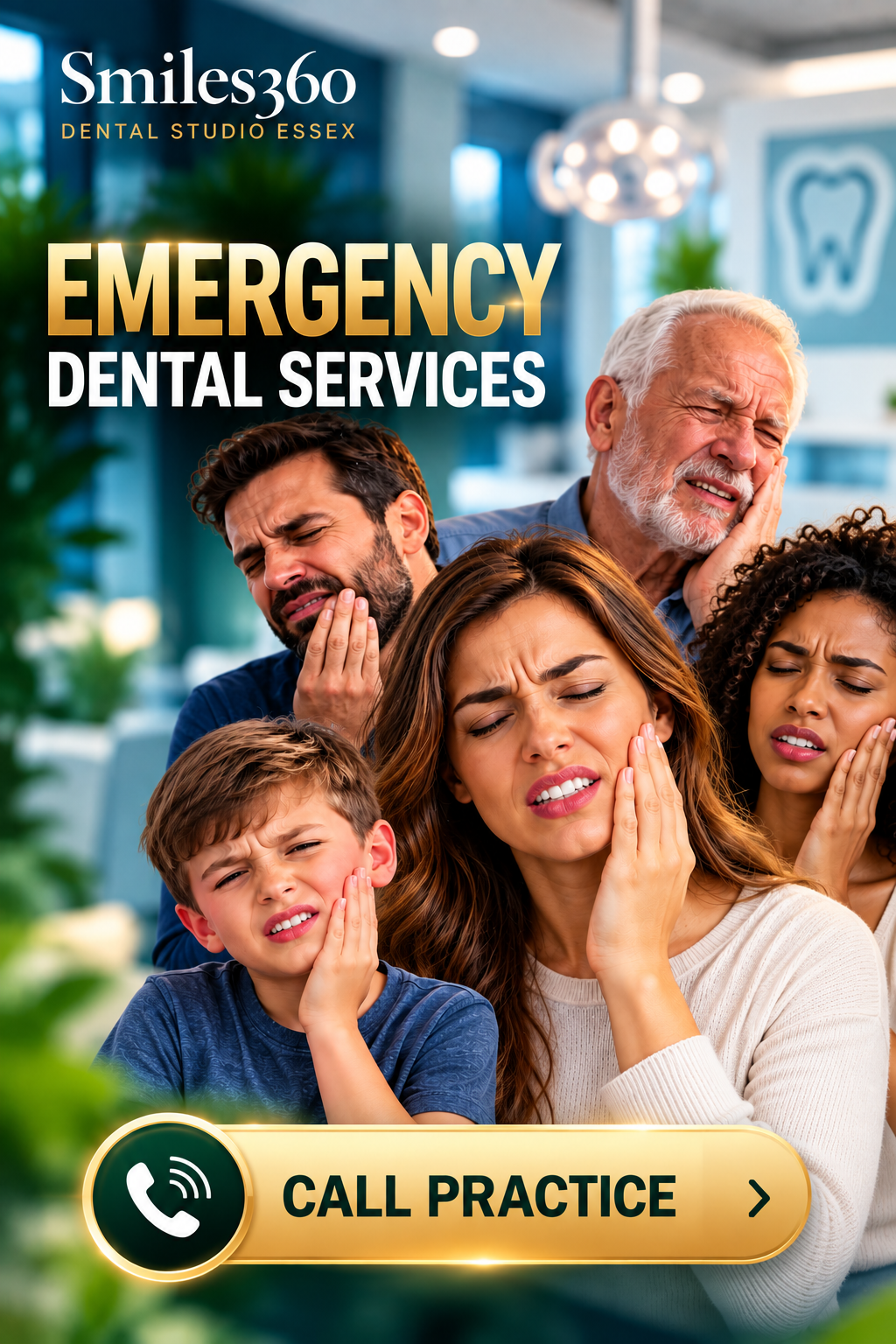
Emergency dental services in Hornchurch - call Smiles360

Dr Haris and his team at Smiles360 are well equipped to deal with a wide range of emergency dental procedures. From the practice at 98 North Street, Hornchurch RM11 1SU, the team can assess urgent dental problems, explain the cause in plain English and discuss the treatment needed to relieve pain and protect your teeth.

You may need an emergency dentist when dental pain, swelling, infection or damage to a tooth cannot safely wait for a routine appointment. Common dental emergencies include severe toothache, a dental abscess, facial or gum swelling, broken or cracked teeth, knocked-out teeth, lost fillings or crowns, wisdom tooth pain and dental injuries. Depending on the problem, emergency treatment may include an examination and diagnosis, pain relief, temporary or permanent repair of a damaged tooth, replacement of a lost filling or crown, treatment of infection, management of an abscess or urgent treatment following dental trauma.

Emergency dental appointments at Smiles360 start from £100, with any additional treatment discussed following assessment. Patients choose Smiles360 and Dr Haris for accessible emergency dental care in Hornchurch, with a focus on assessing the problem quickly, explaining the available treatment clearly and providing reliable care aimed at relieving pain and protecting the tooth wherever possible.


When is it a dental emergency?

A dental problem becomes urgent when pain, infection, bleeding or trauma cannot sensibly wait for a routine appointment.

Severe toothache

Persistent or intense pain, especially pain that affects sleep, eating or normal daily activity, needs dental assessment. Pain is a symptom; the cause may be decay, inflammation inside the tooth, a crack, infection or another dental problem.

Swelling or abscess

A dental abscess is an infection and does not simply cure itself. Gum, jaw or facial swelling, a bad taste, fever, tenderness or difficulty chewing can all be warning signs that need prompt attention.

Broken or knocked-out tooth

Dental trauma is time-sensitive. A badly fractured tooth can expose sensitive inner tissue, while a knocked-out permanent tooth needs immediate action to give it the best chance of being saved.

Lost filling or crown

A missing restoration can expose the tooth underneath. Even when pain is mild, arrange an assessment before the tooth deteriorates further. Significant pain or fracture makes the problem more urgent.

Wisdom tooth pain

Pain and swollen gum around a wisdom tooth can make eating difficult and may be associated with inflammation or infection. Worsening pain, swelling or restricted mouth opening should not be ignored.

Bleeding or dental injury

Bleeding after an extraction or injury that does not settle needs urgent advice. Major facial or jaw trauma, or bleeding that cannot be controlled, may require hospital emergency care.

What to do while you are waiting

If you are waiting to be seen, these simple steps can help you protect the area and explain the problem clearly when you speak to the dental team.

01

Call early

Tell the dental team where the pain is, when it started, whether there is swelling or trauma and whether you can eat, sleep and open your mouth normally.

02

Protect the area

Avoid chewing on a broken or painful tooth. Keep the mouth clean gently. Do not place aspirin directly against a tooth or gum.

03

Use pain relief safely

A pharmacist can advise whether over-the-counter pain relief such as paracetamol or ibuprofen is suitable for you while you wait for dental care.

04

Know the red flags

Call 999 or go to A&E for serious facial or jaw injury, uncontrolled heavy bleeding, or severe swelling affecting breathing, swallowing or the eyes.

Knocked-out adult tooth

This is one of the dental emergencies where minutes matter.

Pick the tooth up by the white crown, not the root. If it is dirty, rinse it gently without scrubbing. If you can, place the adult tooth back into its socket. If that is not possible, keep it in milk and seek emergency dental care immediately. Do not attempt to put a knocked-out baby tooth back into the socket.

NHS England guidance treats an avulsed permanent tooth as an emergency and advises that reimplantation within 60 minutes is strongly preferred where possible.

Dental abscess and swelling

An abscess needs treatment from a dentist; waiting for it to disappear can allow the problem to worsen.

Common signs include intense tooth or gum pain, facial or jaw swelling, sensitivity, a bad taste, difficulty chewing, swollen glands or fever. Treatment depends on the source and severity. Antibiotics are not an automatic substitute for dental treatment and are prescribed only when clinically appropriate.

If swelling becomes severe or spreads towards the eye or neck, or you have difficulty breathing, speaking or swallowing, seek emergency medical care.

Emergency dental FAQs

Straight answers to the questions people commonly ask when a tooth suddenly hurts, breaks or swells.

Severe or persistent toothache, facial or gum swelling, a suspected dental abscess, a broken or knocked-out tooth, uncontrolled bleeding after dental treatment, painful dental trauma, or a lost restoration causing significant pain can all need urgent dental assessment.

Smiles360 Dental Practice in Hornchurch assesses urgent dental problems. Contact the practice as early as possible and explain your symptoms so the team can advise on the most appropriate appointment.

Most toothache is treated by a dentist rather than A&E. Call 999 or go to A&E for serious facial or jaw injury, heavy bleeding that will not stop, or severe swelling affecting breathing, swallowing or the eyes.

Dental swelling can be caused by infection and should be assessed urgently. If swelling is rapidly spreading or makes it difficult to breathe, swallow, open your mouth or affects your eye, seek emergency medical help.

No. A dental abscess needs dental treatment. Pain may temporarily ease, but the source of infection still needs assessment and appropriate treatment.

Act quickly. Hold the tooth by the crown rather than the root. If it is dirty, gently rinse it without scrubbing. If possible, place it back in the socket; otherwise keep it in milk and seek emergency dental care immediately. Do not reinsert a baby tooth.

A broken tooth should be assessed promptly, especially if it is painful, sharp, bleeding, very sensitive, or the inside of the tooth appears exposed. Treatment depends on how much tooth structure has been damaged.

Tooth pain that is severe, persistent, stops you sleeping or carrying out normal activities, or is not controlled by normal pain relief warrants urgent dental advice.

A lost filling, crown, bridge or veneer is not always a medical emergency, but it can leave a tooth sensitive or vulnerable. Arrange dental assessment promptly, particularly if there is pain or the tooth has fractured.

Yes. Severe wisdom tooth pain, swelling around the gum, difficulty chewing or difficulty opening the mouth can need urgent assessment. The dentist will examine the cause and discuss appropriate treatment.

Not every dental emergency needs antibiotics. Dental treatment is often required to address the source of the problem. Antibiotics are prescribed only when clinically appropriate after assessment.

The dentist will ask about your symptoms and medical history, examine the problem and may take dental X-rays when needed. The immediate aim is to diagnose the cause, relieve pain, manage infection or trauma and explain the next treatment step.

Need an emergency dentist in Hornchurch?

Tell Smiles360 what has happened and request an urgent appointment. For severe swelling affecting breathing or swallowing, uncontrolled heavy bleeding or serious facial trauma, use emergency medical services instead.